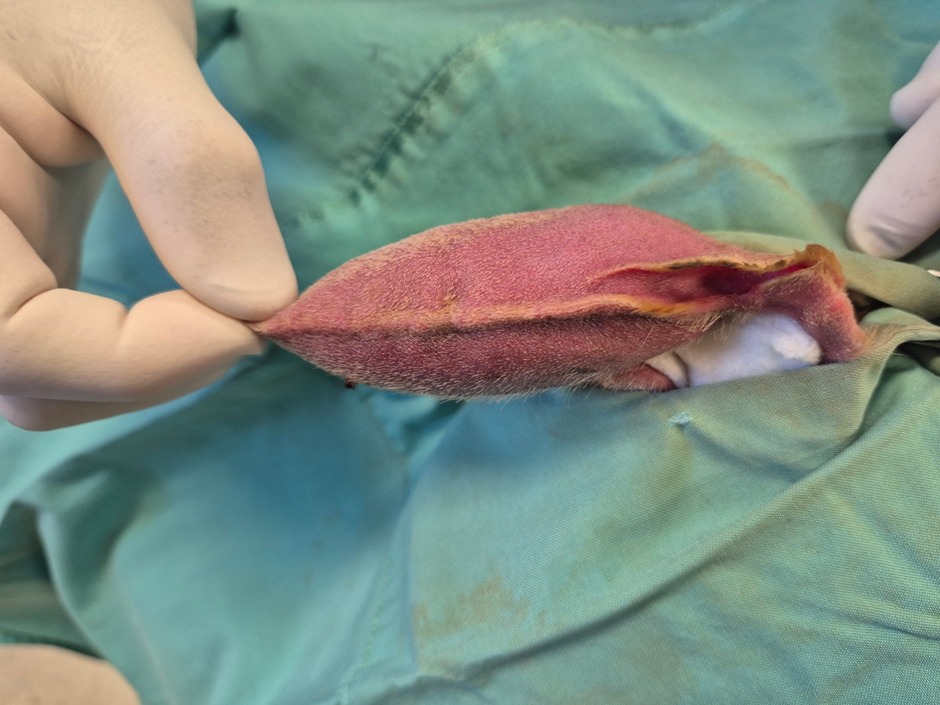
If your dog has developed a swollen, soft ear that appears to be filled with fluid, they may be experiencing a condition known as an aural haematoma.
This condition can appear quickly and often causes significant discomfort for dogs, leading to head shaking, ear scratching, and changes in how they hold their ears.
While an aural haematoma may look alarming, it’s a common condition we see in our veterinary practice and can be treated effectively when addressed early.
In this article, Dr. Kunal Nagaich explains how aural haematomas develop, the signs owners should watch for, the different treatment options available, and what can be done to prevent them from occurring in the first place.
Aural Haematoma Symptoms
An aural (related to the ears) haematoma (blood-filled space) is an uncomfortable and painful condition that develops in one or both of a dog’s ears. The ear appears to swell up like a balloon.
The swelling is soft, squishy and warm, and causes the ear to droop and the dog to constantly tilt their head or flap their ears from side to side, due to discomfort and pain.
Watch the video above for a visual reminder of what it looks like.
Causes of Aural Haematoma
An aural haematoma is most commonly caused by excessive head shaking or scratching by the dog.
The flappy part of the dog’s ear, called the pinna, consists of cartilage sandwiched between skin. Between the cartilage and the skin on either side, there is a mesh of blood vessels as shown in the image below.
Scratching and head shaking can, in turn, occur due to underlying allergies or infections caused by yeast, bacteria, or mites. The vigorous shaking or scratching causes the blood vessels between the skin and the cartilage to get damaged and leak into the space between the cartilage and the skin.
This space, over time, fills up with a bloody fluid, forming a haematoma as shown in the image below.
Treatment Options for Dogs with Aural Haematomas
The treatment of an aural haematoma centres around the drainage of the contents of the haematoma (the bloody fluid-filled swelling). This allows the cartilage and the skin to come into contact and merge again.
This can be achieved in a few ways:
- Draining with a needle and syringe and injection of a steroid into the haematoma (least effective)
In this procedure, the skin of the ear is numbed, and a needle is inserted into the haematoma, and the contents are sucked out. This is done while the patient is awake.
It’s never possible to suck out all the contents, as the fluid exists in pockets, and multiple stab wounds would have to be made, which can make the patient uncomfortable. So, we do the best we possibly can in one or two jabs.
Further, blood and serum may continue to leak into the space due to the inflammation, in which the ear fills up with fluid, again, then again, separating the cartilage and the skin.
This procedure may have to be repeated multiple times for it to be effective and may only be suitable for patients with small haematomas or those that cannot be sedated or anaesthetised due to health risks.
After draining, a steroid is injected into the space to reduce inflammation and, consequently, fluid production.
- Passive Drainage (More effective)
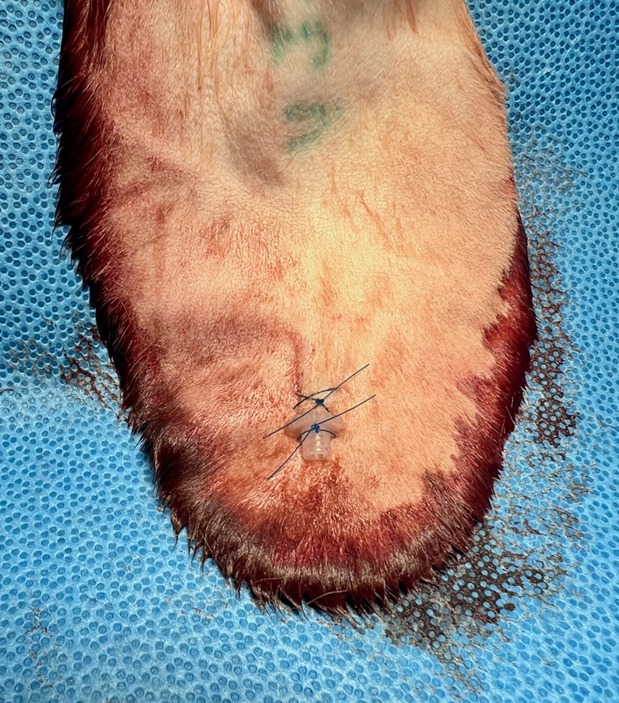
This procedure involves placing a temporary drain into the Haematoma, as shown in the image below.
This drain remains in place while the haematoma is healing. This procedure is more involved because it requires the patient to be sedated for the drain to be inserted and secured.
This procedure achieves the goal of draining the fluid to bring the skin and cartilage into contact, but does not ensure that the cartilage and skin will join up again, eliminating the empty space. It also involves aftercare such as bandaging, bandage changes or the constant dripping of bloody fluid from the pet’s ear over the next 2-3 weeks. So, it can be messy, more costly, and still not guarantee recurrence.
- Surgical Treatment (Most effective)
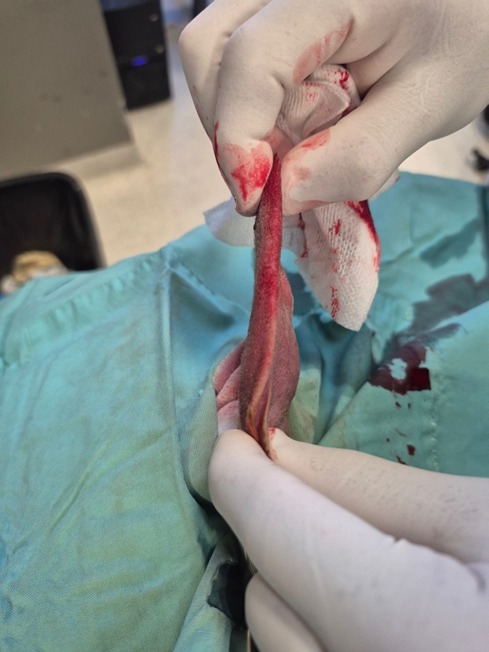
This procedure is performed under general anaesthetic, so the patient feels no pain and can take from 30 mins to 90 mins to complete, depending on the extent of the ear involved in the haematoma.
In this instance, we make an S-shaped incision on the inner side of the ear to drain all the fluid, and then place many 1cm-long sutures in the areas affected by the haematoma. Each point where the needle enters the skin and cartilage causes fibrosis and essentially ‘welds’ the skin and cartilage together. We need to place sufficient stitches so that we leave behind no empty pockets.
In the postoperative period, we either bandage the ear or send the patient home with an Elizabethan collar, which prevents the patient from scratching the ear and any leakage from splattering on the walls.
When the ear heals in 2-3 weeks, we will have several points of ‘welding’ between the cartilage and skin, which will prevent any future occurrence.
We find that this treatment is most effective and is a definitive treatment; even if the pet shakes their head or scratches vigorously, the skin and cartilage do not separate.
We have never had a case of recurrence after this procedure.
Therefore, in our opinion, this is the best way to treat aural haematomas in dogs.
We always discuss the pros and cons of each procedure and perform them with informed consent, taking into consideration the patient’s needs, and the owner’s wishes and finances.


- Treating the Underlying Condition
Because an aural haematoma is usually caused by an underlying problem, that issue must also be treated. This may include allergies, infection, or a foreign body in the ear. If the underlying cause is not addressed, the haematoma may not heal properly, or it may recur, and your dog may continue to experience discomfort.
How to prevent the formation of Aural Haematomas in Dogs
Monitor your dog’s ears regularly
Get used to seeing what is ‘normal’. The skin of a normal ear is pink to grey in colour on the inside; it is not warm, swollen or uncomfortable to handle. There is no redness, swelling, or thickening. If you get used to noticing what is normal for your dog, you will pick up on things as soon as they change.
Scratching
As soon as your dog starts to scratch their ears, tilt their heads, or flap their ears more than normal, we strongly recommend that you visit your veterinarian, as they might have an underlying infection, allergy, or foreign body.
If we can address the cause of the irritation at the right time, we may be able to prevent the formation of an Aural Haematoma in the first place. This will save owners a lot of money and spare your pets a significant amount of pain and discomfort if one were to develop.
Prevent water from entering your dog’s ears
If you bathe them, cover their ears while you pour water over their heads. This can be a two-person job.
Clean their ears
If you take your dog to a lake or the beach, where they get wet or even after a bath, clean their ears with an ear cleaner once a day for 2-3 days. Ear cleaners can be purchased from a vet clinic or an online pharmacy.
Allergies
If your dog has allergies, get on top of the allergies before they flare up into ear infections.
Talk to your veterinarian
We will be able to devise a prevention plan for your dog based on their history of seasonal or year-round allergies. Be proactive, know your dog, and be aware when they develop allergies because allergies lead to infections, both of which can cause excessive shaking and, consequently, the development of aural haematomas.
Practical Tips and suggestions for owners of dogs with Aural Haematomas
If you notice that a part of the ear is swollen, is soft, warm and squishy please visit your veterinarian immediately as over time the fluid will continue to fill and inflate more of the ear.
The more of the ear that is affected by the aural haematoma, the more painful and uncomfortable it is for the patient and the more involved the treatment and the more the costs.
In our experience the best and the most definitive way to treat an aural haematoma is the surgical option. While this may be the most expensive at the outset, it is definitive.
If you try the more conservative options first and then have to proceed to the surgical option it will end up taking longer to repair, it will involve more visits to vet and hence end up costing a lot more. Therefore, we do recommend going for the surgical option at the outset when this condition is diagnosed.
Summary
Aural haematomas are a painful condition caused by excessive shaking of or scratching of the ear. These are seen as a fluid filled swelling on the flappy portion of the dog’s ear. There is always an underlying condition which will need to be diagnosed and treated along with the haematoma itself.
We find that the most effective way to treat an aural haematoma is through the surgical option as described in this article. This is definitive and we never get any recurrence after performing this procedure.
Owners can avoid the development of an Aural Haematoma by following simple steps such as regularly examining their dogs’ ears, preventing any water from getting in, preventing flare ups of allergies and taking them to the vet at the first sign of an abnormality of discomfort in the ear.
At Lynbrook Vet and Berwick Clyde Vet we have extensive experience in managing the health of dog’s ears, diagnosing the underlying causes, preventing and managing allergies and flare ups and the surgical treatment of aural haematomas. So, if you have any concerns about your dog’s ears, please give our friendly team a call on 03 5902 7087 or 03 8373 0301 and we would be delighted to help you.