Cherry Eye Surgery & Treatment for Pets
Cherry eye is a condition commonly seen in cats and dogs, often requiring surgical treatment. If your pet is affected by cherry eye or you suspect they might be, our experienced veterinarians are here to help. With years of expertise in treating this condition, we provide compassionate and expert care to ensure your cat or dog receives the attention they deserve. Let us support your pet’s journey to recovery and better health.
What is Cherry Eye?
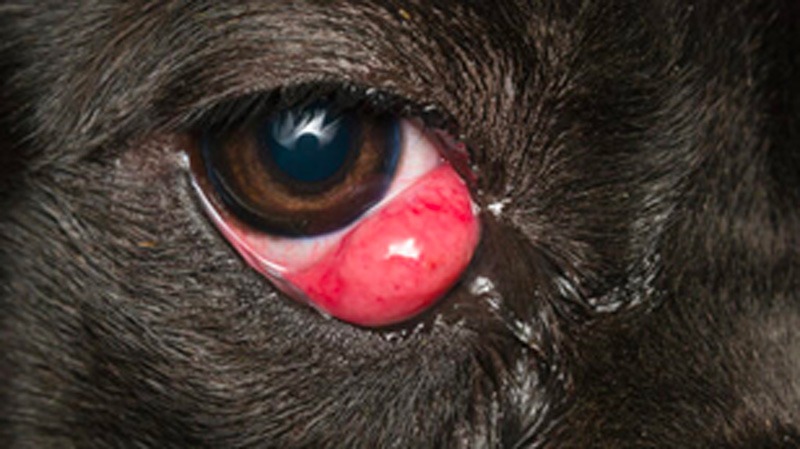
Cherry eye is a condition where the third eyelid gland, which normally sits within the third eyelid or nictitating membrane, prolapses. The third eyelid is normally retracted and hence unseen. It sweeps across the eye from the inside corner of each eye. It is responsible for keeping the cornea, or surface of the eye, lubricated and contributes to 35% of overall tear film production. When the gland prolapses, it protrudes upwards, creating a smooth pink or red mass in the inner corner of the eye similar to the appearance of a Cherry.
Why Does Cherry Eye Require Surgery?
Without correcting the prolapsed cherry eye, chronic exposure of the third eyelid gland will lead to inflammation, conjunctivitis, ocular irritation, and pain. A condition called “dry eye” can also result from damage to the third eyelid gland, leaving it unable to produce tears and keep the eye lubricated.
In some cases, the gland prolapse can correct or reposition itself naturally or following gentle massage of the gland into the correct anatomical position. Unfortunately, this is mostly only temporary, and the prolapse will likely recur, requiring surgical intervention.
Which Dog Breeds Are Prone to Cherry Eye?
Cherry eye is a common condition in Cocker Spaniels, Lhasa Apsos, Pekingese, Beagles, and Bulldogs.
Which Cat Breeds Are Prone to Cherry Eye?
Cats are less commonly affected, but it can occasionally occur in Burmese, Siamese, and Persians. Most animals are affected before 2 years old.
Signs and Symptoms of Cherry Eye
The signs and symptoms are quite obvious and primarily include the appearance of red/ pink tissue from the inside corner of one or both eyes as shown in the attached picture. Depending on the size of the prolapse, the condition can reduce vision, leading to irritation, which might cause the patient to try to rub at the eyes.
Treatment Options for Cherry Eye
Non-surgical Treatments
These are temporary at best and involve using a sterile cotton tip to push the gland back into its position and controlling any inflammation or infection in the eyes that may be contributing to the prolapse.
Surgical Treatments
Surgery is the most common treatment for a permanent Cherry Eye in dogs and cats.
What is Involved in Cherry Eye Surgery?
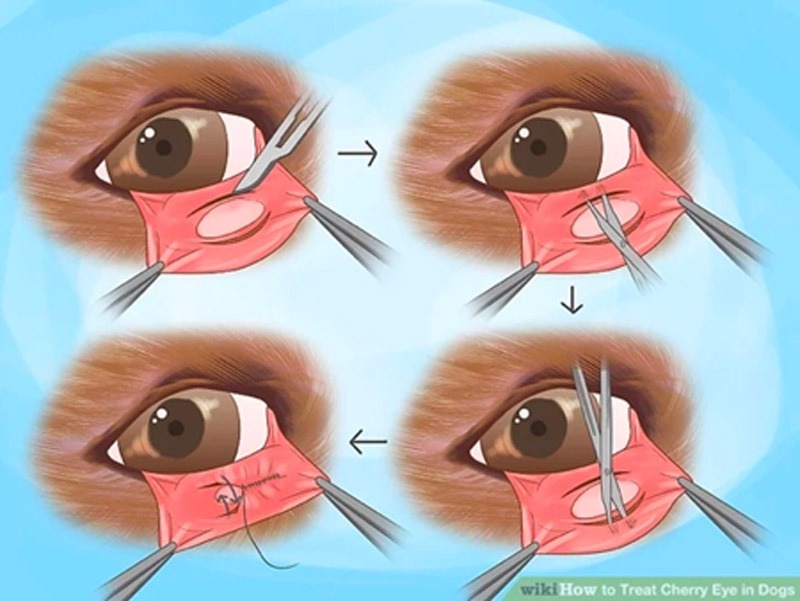
The aim of surgery is to return the third eyelid gland to its normal position. We achieve this by creating a pocket within the conjunctival tissues in the eyelid and burying the gland within this pocket to keep it securely in place.
The pocket is created by making a parallel incision in the conjunctiva above and below the gland. The gland is then gently pushed into the pocket using a sterile cotton tip and sutured closed in a continuous pattern. The suture knots are placed on the outside of the conjunctival surface to prevent them from irritating the eye.
Potential Risks & Complications of Cherry Eye Surgery
Corneal ulceration can sometimes occur secondary to abrasion caused by the sutures placed in the third eyelid. It is important to monitor your pet after surgery for excessive squinting or ocular discharge. Rarely, if there is blockage of tear film secretion channels, following surgery, cysts can form within the conjunctiva.
Cherry Eye Post-Surgery Care and Recovery
Your pet should be kept quiet and rested for 10-14 days post-surgery. An Elizabethan collar will be supplied and should be worn until the eye has completely healed. Failure to wear an Elizabethan collar may result in your pet attempting to rub or scratch at their eyes, which could cause suture breakdown and relapse of the cherry eye.
Your vet will check the healing of the sutures at 7 days and 14 days post-surgery to ensure there is no breakdown, which could lead to reoccurrence of the cherry eye. Pain-relief medication and antibiotic eye drops will be dispensed to keep your pet comfortable and pain-free and to prevent the risk of infection.
Why Choose Us?
Frequently Asked Questions
Full recovery takes between 7-10 days.
If left untreated, the cherry eye can be an annoyance to your pet as it reduces their vision (depending on the size of the prolapse). Further the prolapsed gland can become dry, irritated, and inflamed. This can lead to irritation and attempts to scratch and may further damage the eyes. If the gland is not producing tears adequately, it can lead to dry eye as well.
From our blog
