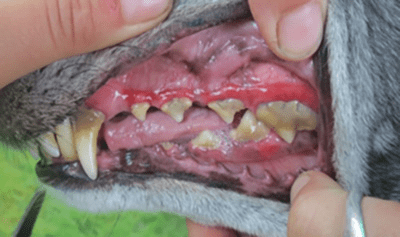
Image source: Royal Veterinary College, University of London
If you own a Greyhound, this article is a must-read. We will dive into why this breed is uniquely predisposed to dental decay and what you can do practically to keep their breath fresh and their teeth functional. It is important to note: by following these practices, you can significantly delay the need for professional procedures, though you may not be able to avoid them entirely.
Why are Greyhounds Predisposed to Periodontal Disease?
There are four primary factors that create a “perfect storm” for dental issues in this breed:
- Shape of the skull
- Genetics and the stress of racing/ training
- Salivary biochemistry
- Diet and racing industry origins
1. The Impact of Skull Shape
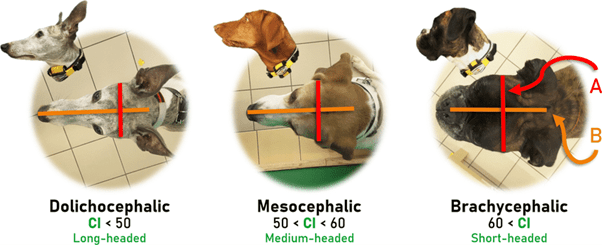
Image source: ResearchGate
Dogs generally fall into three skull categories: Mesocephalic (normal shapes like Labradors), Brachycephalic (squished faces like Bulldogs), and Dolichocephalic (the extended head shape of the Greyhound). Both extreme shapes—the squished and the elongated—predispose dogs to periodontal disease.
In Greyhounds, the elongated head shape causes the bones of the skull to be drawn out and significantly thinner. This thinning is most critical in the alveolar processes, which are the specialised bone sockets that hold the teeth in place.
The Chain Reaction of Decay Periodontal disease begins with a thin film of bacteria called plaque, which eventually hardens into calculus/ tartar. Both harbour bacteria that trigger the body’s immune system to send white blood cells to the gums, causing inflammation (redness and pain). In most dogs, this is a slow process. However, because Greyhounds start with much thinner bone and ligaments, this inflammation causes far more damage, leading to rapid bone loss, deep pockets, and loose teeth.
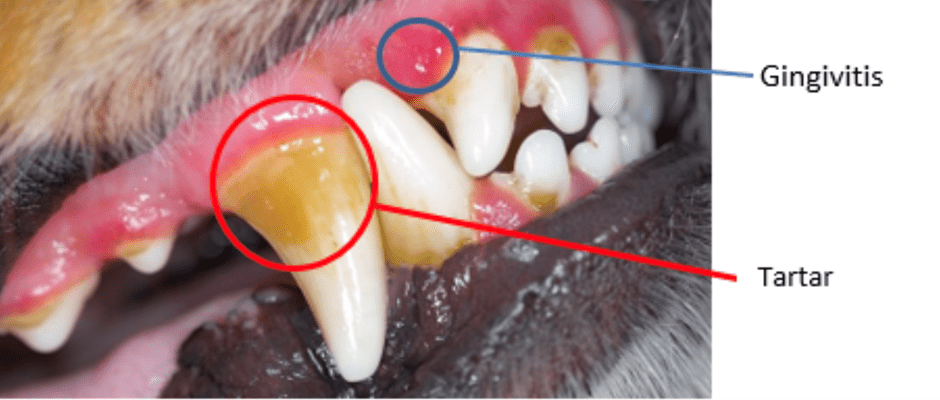
Image Source: LocalVet AU
Furthermore, Greyhounds often have a longer upper jaw compared to the lower one, known as maxillary prognathism. This misalignment (malocclusion) creates “dead zones” where food and bacteria accumulate without the natural cleaning action of a normal bite, further accelerating the disease.
2. Genetics: Bred for Speed
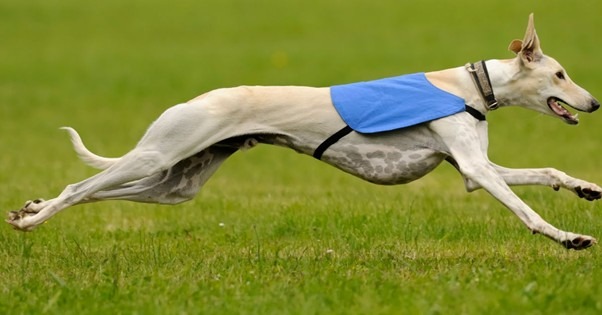
For generations, Greyhounds have been bred with a singular focus: speed. Breeding programs prioritised muscle mass, cardiovascular efficiency, and bone length.
Unfortunately, this exclusive focus allowed negative genetic traits to persist, including decreased resistance to chronic inflammatory conditions like periodontitis.
Research suggests that breeding for speed has led to a “hyper-immune” or unbalanced response to oral bacteria. Essentially, a Greyhound’s body overreacts to plaque and calculus, destroying the alveolar bone and periodontal ligament at a much higher rate than other dogs.
The Stress Factor Most Greyhounds spend their early years in the training and racing industry. The physical and mental stress of this lifestyle increases cortisol levels. High cortisol suppresses the immune system, preventing the dog from mounting a normal defence against oral infections. This allows pathogens to establish deep-seated infections that continue to plague the dog long after they have retired.
3. Salivary Biochemistry
Greyhound saliva is uniquely efficient at creating calculus. This is due to “super-saturated” levels of calcium and phosphorus combined with a high pH. While plaque takes 3–5 days to harden in most dogs, this process can happen within 24–48 hours in a Greyhound.
Additionally, their saliva is rich in specific glycoproteins. While intended to protect the enamel, these proteins act like “double-sided tape,” immediately attracting bacteria to the tooth surface after cleaning. This is why your Greyhound’s gums may appear red and inflamed just days after a professional dental cleaning.
4. Diet and Racing Industry Origins
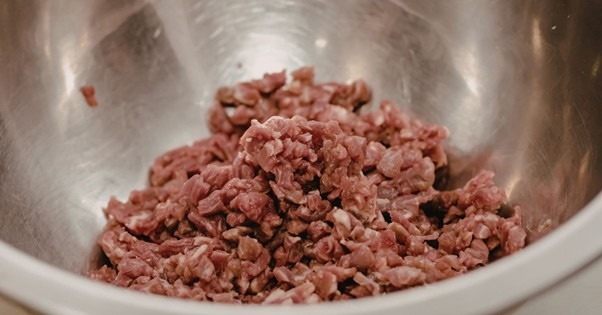
The racing industry, driven by economics, often relies on raw meat diets sourced from knackeries. This meat is unfit for human consumption and can carry high bacterial loads of Campylobacter, Salmonella, and E. coli. This constant exposure to bacteria leads to rapid plaque formation. If ignored, this can lead to permanent gum recession and root exposure by the time the dog is rehomed at 2–5 years of age. This root exposure and gum recession allows food to accumulate after a meal predisposing to plaque and calculus formation.
How to Practically Manage Your Greyhound’s Dental Health
Understanding why the disease happens is only half the battle. Here is my proven 4-step strategy for long-term management.
The Professional Clean (Scale, Polish and X-Rays)
We must start with a clean slate. A thorough scale and polish removes all calculus, providing immediate pain relief and allowing the gums to begin healing. In advanced cases, dental X-rays are vital to identify tooth root abscesses or bone loss that isn’t visible to the naked eye. Removing compromised teeth is essential; it stops pain and prevents a swift redevelopment of bacteria in deep, infected pockets.
Regular Bones
Once the mouth is healthy, we enter the maintenance phase. I have found raw or gently cooked bones to be the most effective tool. They should be offered 2–3 times per week for about 20–30 minutes.
My Personal Technique:
- Selection: Use a large bone, roughly the size of your dog’s head, such as beef chuck or pork neck. This prevents them from swallowing it whole and forces them to use their incisors, premolars, and molars to scrape the meat off.
- Preparation: My dogs are fussy and won’t eat raw bones, so I gently cook them in boiling water for about 5 minutes until the meat turns brown.
- The “Canine” Gap: Bones effectively clean most teeth, but they often miss the large canine teeth (the fangs). You can actually see this difference at home: the premolars will be white, while the canines may still show buildup. These will still require brushing or regular scaling.
- Risks: Owners must weigh the risks of bones, including constipation, tooth fractures, or obstructions, and should speak to a vet before starting.

By using bones, I have extended the time between my dogs’ professional dental procedures from 6 months to 2 years—a significant cost saving.
Other options – Daily brushing, additives and gels
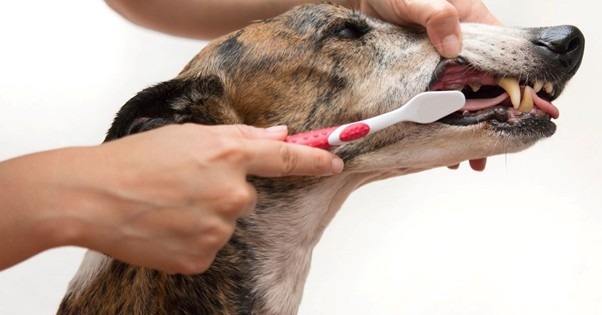
If you choose not to use bones, daily brushing is the gold standard. To be effective, it must be done once or twice a day, just like humans. In my experience as a vet, very few owners maintain this diligence, but those who do are able to stay on top of the disease. If you cannot brush daily, you must combine it with other techniques, such as bones or dental treats.
Practically speaking, I have not found dental treats, gels, or water additives to be effective for Greyhounds. Their predisposition to disease is simply too high for these mild methods to handle. However, something is better than nothing, so do what you can and schedule regular dental health checks with your veterinarian every 6 months.
Summary
Greyhounds are uniquely prone to bad breath, red gums, and heavy calculus due to their anatomy, physiology, genetics and start in the greyhound racing industry. Traditional treats and occasional cleans are rarely enough. Based on my experience, supervised use of bones and regular dental checks every 6 months is the most effective way to maintain their dental health.
At Lynbrook Vet and Berwick Clyde Vet, we have extensive experience with this breed and would love to help you manage your Greyhound’s dental health for the long term.
Book an appointment, or call our friendly team (03) 5902 7087