Does my cat lick and itch a lot?
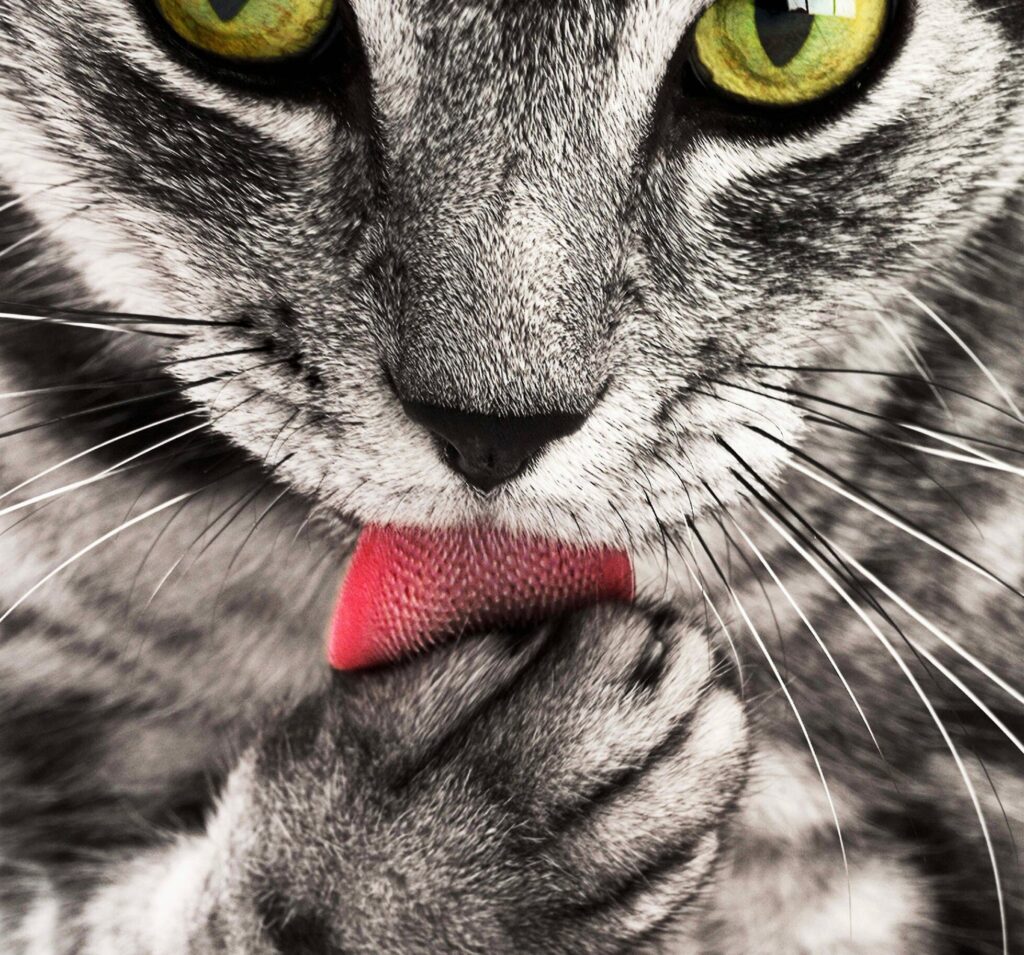
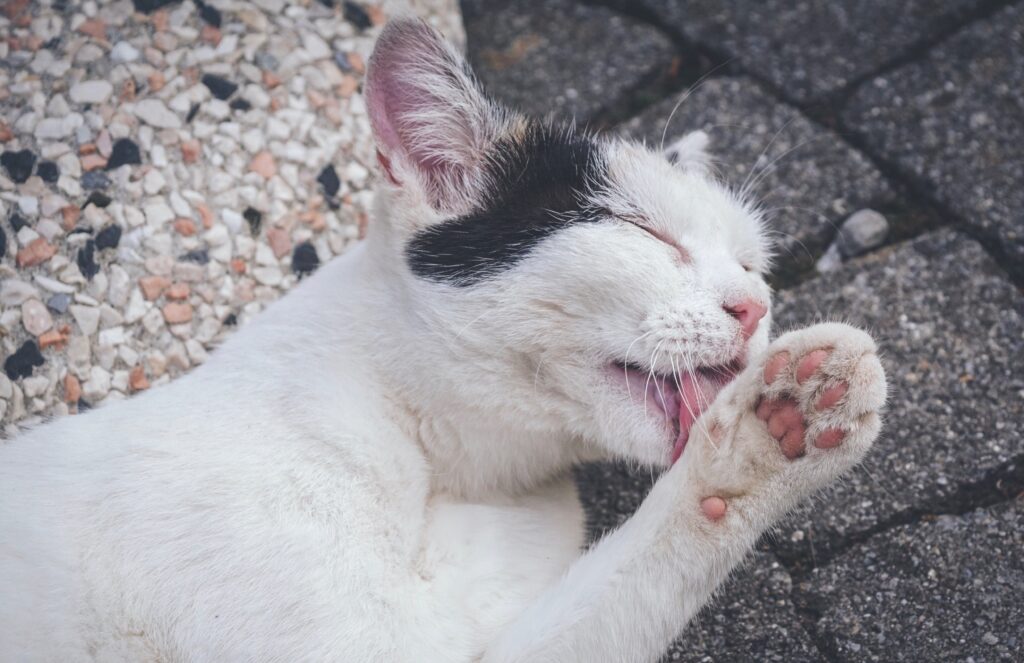
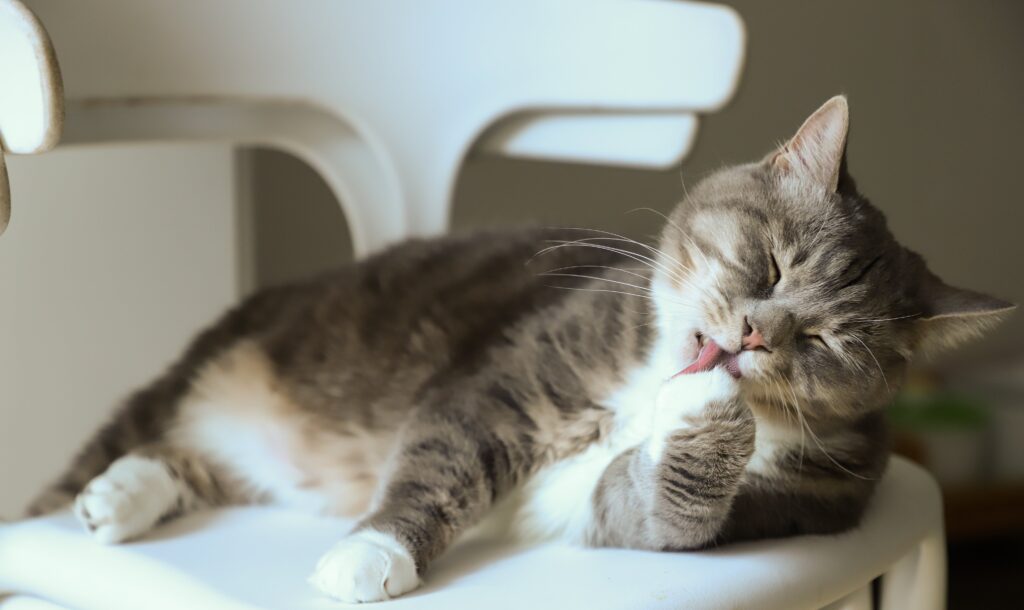
Cats are clean animals and will spend a considerable time grooming themselves. Their rough tongues help remove lose hair, dirt and parasites from their skin. However, there is a fine line between normal grooming behaviour and excessive grooming/ scratching so much so that it affects their quality of life causing skins lesions.
So how much is too much?
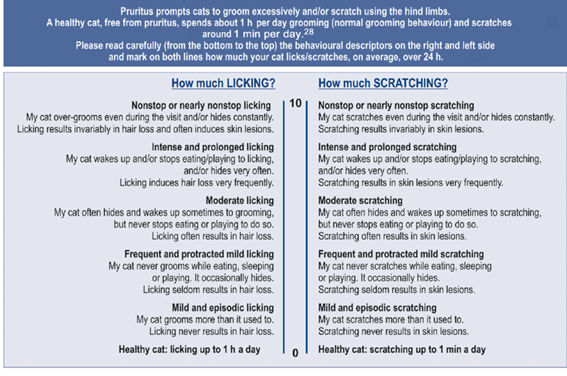
It is normal for cats to scratch for up to one min per day and lick themselves as grooming for up to one hour per day. Normally this grooming and scratching behaviour does not interrupt other activities such as sleep, eating food, playing etc. It also should not leave behind any lesions such as hair loss, wounds or scratches on the skin. Please use the attached scale to assign your cat a score from 0 to 10. Anything more than a 0 is abnormal and depending on the severity should be investigated with your veterinarian.
Try the quiz below and see where your cat ranks on the licking and scratching scale.
Why is my cat scratching or licking more than normal?
If you cat has scored more than a zero in the above scale and is he/she is licking or scratching themselves during activities and leaving behind scratches on the skin or causing hair loss, then they are displaying signs of pruritis or itching.
The itching could be caused by one of the following:
- External parasites – These include fleas and mites.
- Food Allergies – Some cats can be sensitive to certain foods and proteins in food causing skin allergies.
- Environmental allergies – This condition is called Feline Atopic Skin Syndrome and is the name given to a skin allergy in cats caused by any environmental allergen. These can include dust mites, pollen, grass allergies etc.
What are the symptoms of allergies in cats?
The cat’s skin responds in a limited number of ways to the above allergies. If you see any of the below mentioned reaction patterns in your cat, you should take your cat to your vet as soon as possible for diagnosis and management.
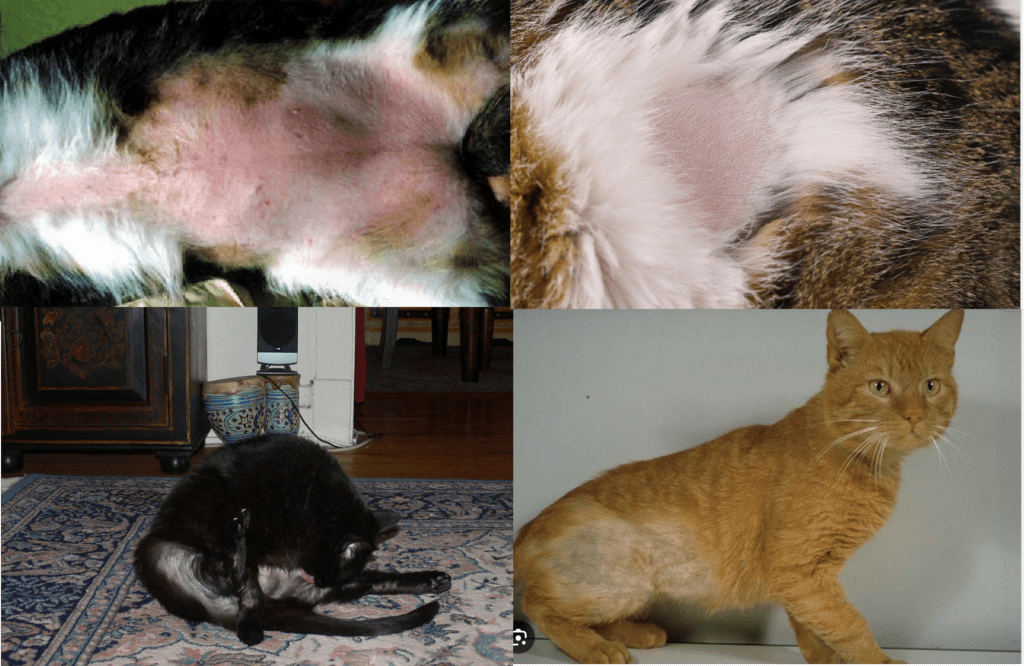
1: Excessive licking causing shortening of hair or areas of bald skin.
This is quite an obvious condition. Your cat will have a high itch score and will lick excessively because he/she is itchy. The cat’s tongue is quite rough and constant licking can first cause the hair shafts to break down and you might notice that the areas in which you cat can lick have shorter hair shafts as compared to areas where they cannot reach.
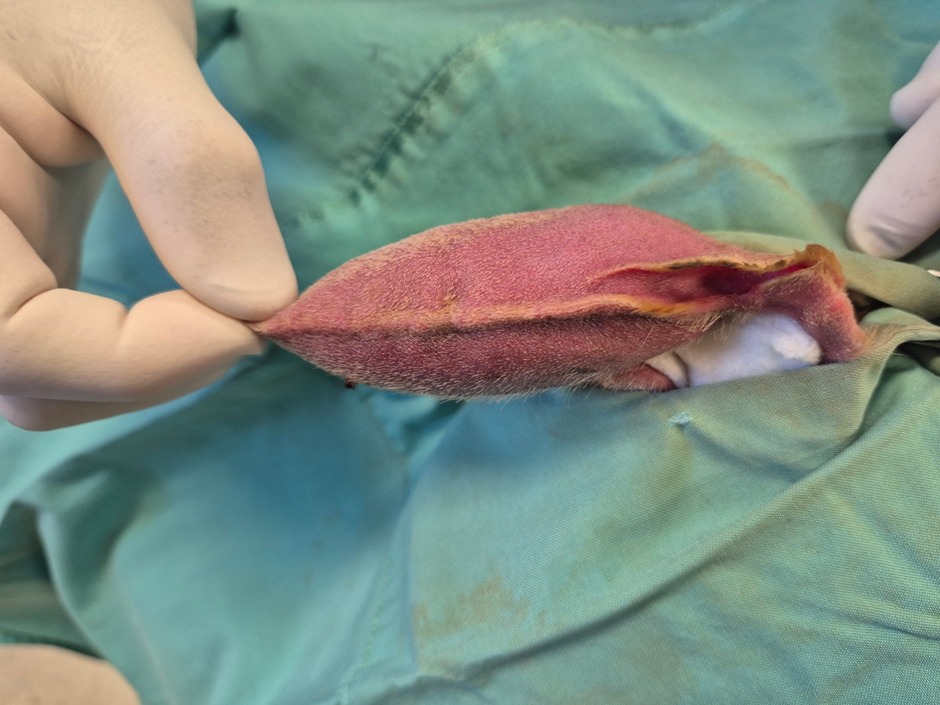
If this continues, then you can get areas of complete hair loss leading to balding skin, as shown in these images.
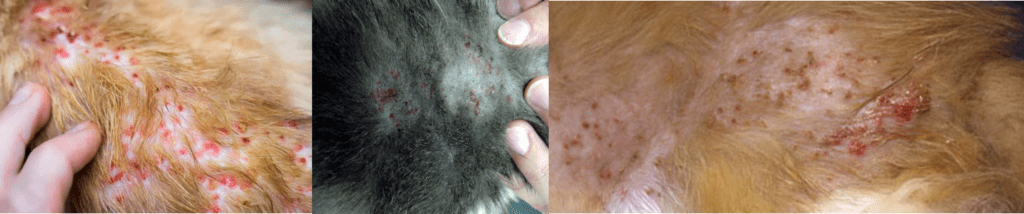
2: Miliary dermatitis
In this reaction pattern the itch causes the cat to lick and bite themselves. This licking and biting in conjunction with the underlying allergy causes the skin to break into lots of small scabby lesions under the fur.
When you touch your cat, you will feel lots of small scabs on the skin. These can either be generalised or restricted to certain areas. When the condition is mild you might only feel it but when it is advanced it will appear with shortened hair or hair loss. The below images may help you recognise miliary dermatitis in your cat.
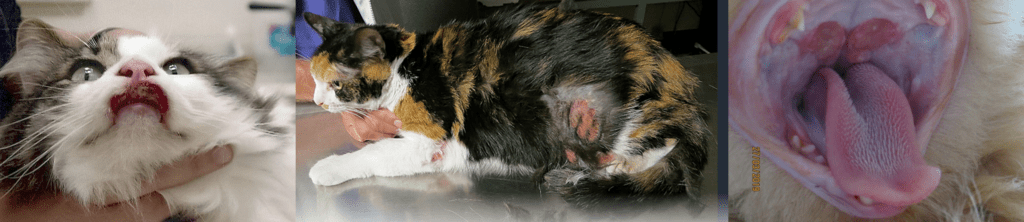
3: Eosinophilic Granuloma complex
In this reaction pattern the cat’s skin, mouth, tongue and lips can develop red, thickened, raised and ulcerated skin. When this condition occurs in the mouth, the cats may drool excessively, their appetite may reduce, and they can be dull and lethargic due to the pain. The images below are examples of eosinophilic granuloma complex in cats.
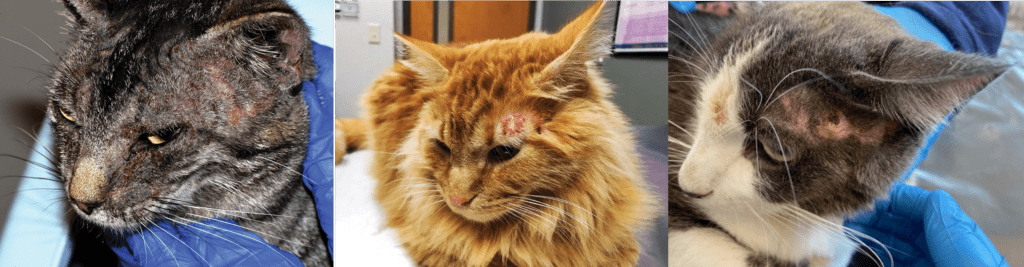
4: Excoriations on the head/face and neck
In this reaction pattern the itching, scratching and lesions are concentrated around the face and ears. Cats will scratch with their back legs and rub their faces on surfaces for relief. These lesions can be mild to severe and may appear in conjunction with any of the previous patterns. The below images are an example of this reaction pattern.
What can I do to help my cat?
Scores of 2 or more:
- If the score you gave your cat was 2 or above, he/she would be quite uncomfortable and should be taken to see the vet immediately.
- If your cat is displaying a reaction similar to any of the ones seen above, you should take your cat to your vet immediately as they will most definitely be quite uncomfortable.
Scores of 1 or less:
- If the score was less than a 2 and if your cat is not licking themselves excessively, causing hair loss or skin wounds, then you can try the following before visiting your vet:
Regular Flea treatments
Perform regular flea and worming treatments for your cat. Topical flea treatment products for cats will not just cover fleas but will also cover skin mites that can cause itching. It is imperative that you check your cats for fleas or signs of fleas and treat regularly with a good quality ( not supermarket brand) flea product. These can be purchased from vet clinics, pet stores or even online. You do not need an appointment with a vet to buy this product and we will be happy to advise you on the best product for your cats. Products such as Revolution and Advocate are quite popular and are to be used monthly. Products such as Bravecto are used once every 3 months. All the products cover different parasites and it’s important to get some advice before you purchase them.
Diet change
Consider changing your cat’s diet: The diet can be a cause of allergies and you should consider changing your cat’s diet. If you are feeding a commercial diet, try to find another commercial diet with a different protein all together. This means if your cat has been eating chicken transition to lamb or beef-based diet.
If you cat is on dry food, change the diet to a different brand and different protein source. Even better is for you to home cook your cat’s food and stop all commercial foods all together! It is critical that you do this correctly however so be sure to CLICK HERE for some home cooked recipes.
If you go down the home cooked path, be sure to choose one of the diets from the link and feed that exclusively for the next 8 weeks. This means that during this time you cat should eat nothing else but the new, home cooked food. After the 8 weeks is up, come back and use the itch score to assess improvement in your cat.
If there is no change to the itch score after flea treatment and a change in diet, then it is time to book an appointment with your veterinarian.
To find out more, or to book call (03) 8373 0301 today!