Pet owners become all-too-familiar with their dog’s toileting habits. And, while it’s not the most glamorous topic, paying attention to your dog’s stool is a vital part of monitoring their overall health. Changes in consistency, colour, or content (like mucus or blood) can be early indicators of dietary issues or underlying illness and should not be ignored.
How to Assess the Consistency of Your Dog’s Stool
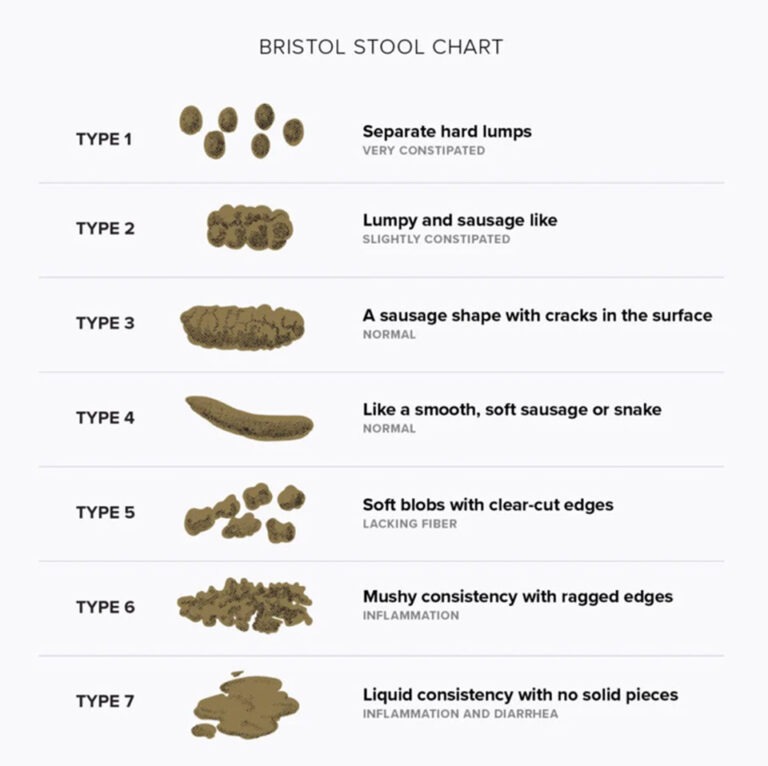
The Bristol Stool Chart, originally developed for humans, can be adapted to help describe your dog’s stool consistency too. We’ll categorise dog stool into seven types, ranging from hard pellets to watery diarrhoea:
- Types 1-2: Very hard, dry stools (constipation).
- Types 3-4: Normal, well-formed stools.
- Types 5-7: Soft to liquid stools (diarrhoea).
The ideal rating for your dog’s stool is a type 3 or 4. This means that the stool is sausage-shaped, firm but easy to pass, not crumbly and dry, but not too moist or losing shape.
What Causes Stool to Be Too Soft or Too Hard?
For dogs, soft or loose stools may result from:
- A sudden change in diet
- Eating inappropriate foods (like fatty table scraps)
- Intestinal parasites (e.g. Giardia, worms)
- Inflammatory bowel disease (IBD)
- Food allergies or intolerances
- Viral or bacterial infections
- Diseases such as pancreatitis or liver disease
- An intestinal obstruction
Hard, dry stools may result from:
- Dehydration
- Lack of dietary fibre
- Sedentary lifestyle
- Anal gland issues
- Joint pain and difficulty postulating to defecate
- Intestinal parasites
- Prostate enlargement
- Spinal disease
- An intestinal obstruction
- Medications that cause dehydration or slow motility
Should I Be Worried About Mucus in My Dog’s Stool?
Mucus is a jelly-like substance that lines the intestines to help stools pass more easily. A small amount of mucus occasionally is usually harmless. However, large amounts of mucus can indicate colitis or inflammation of the colon, which has many causes. Mucus, especially when accompanied by soft stool, urgency, or blood, can be a sign of:
- Food intolerance or rapid changes to diet
- Infections (bacterial, viral, fungal, parasitic)
- Ingestion of foreign material or food
- Inflammatory bowel disease (IBD)
- Acute haemorrhagic diarrhoea syndrome (when mucus is mixed with blood)
What Does Blood in Stool Mean?
Bright red blood (fresh blood) in the stool often suggests inflammation or bleeding in the lower intestines, rectum, or anal area. This is commonly seen with:
- Straining to defecate
- Anal gland issues
- Anything that causes colitis or inflammation of the colon, such as infection, allergies, IBD, bowel obstruction etc.
Dark or black, tarry stool (known as melena) indicates that the blood in the stool has been digested, suggesting bleeding from higher up in the digestive tract, such as the small intestine or stomach, which can be more serious.
In either case, blood in stool should always be discussed with your vet.
Managing Soft or Hard Stools at Home
If your dog is otherwise well (bright, eating, and drinking normally), you can try the following strategies at home to get your dog’s stool back on track.
For soft stools:
- Gradually switch to a bland, easily digestible but nutritionally complete diet for a few days (such as Royal Canin Gastrointestinal Low-Fat food, or Royal Canin Sensitivity food, or Hills i/d Digestive Care food)
- Add psyllium husk (plain metamucil powder) to the diet at 1tbsp daily for small dogs and 2tbsp daily for large dogs
- Consider adding probiotics to help restore healthy gut bacteria
For hard stools:
- Increase hydration (wet food, more water bowls)
- Add psyllium husk (plain metamucil powder) to the diet at 1tbsp daily for small dogs and 2tbsp daily for large dogs
- Gentle exercise to promote regular bowel movements
When to See Your Vet About Your Dog’s Stools
You should seek veterinary care if your dog:
- Has persistent soft or hard stools for more than 48 hours
- Shows signs of lethargy, vomiting, weight loss, or decreased appetite
- Has visible blood or excessive mucus in their stool
- Is straining or vocalising when attempting to defecate
- Is a puppy, elderly dog, or has existing medical conditions
Your vet may recommend tests such as:
- Faecal analysis to check for parasites, bacterial overgrowth or viruses
- Blood tests to evaluate organ function and screen for inflammation
- Dietary trials for food allergies or intolerances
- Imaging (like X-rays or ultrasound) if obstruction or more severe disease is suspected
Monitoring your dog’s stool may not be pleasant, but it can be one of the first clues that something is amiss. Understanding what’s normal and what’s not helps you know when simple home care is enough and when it’s time to book an appointment with your vet.
If you’re ever unsure, it’s always better to ask. We’re here to help! Give our experienced and understanding team a call, or book an appointment.