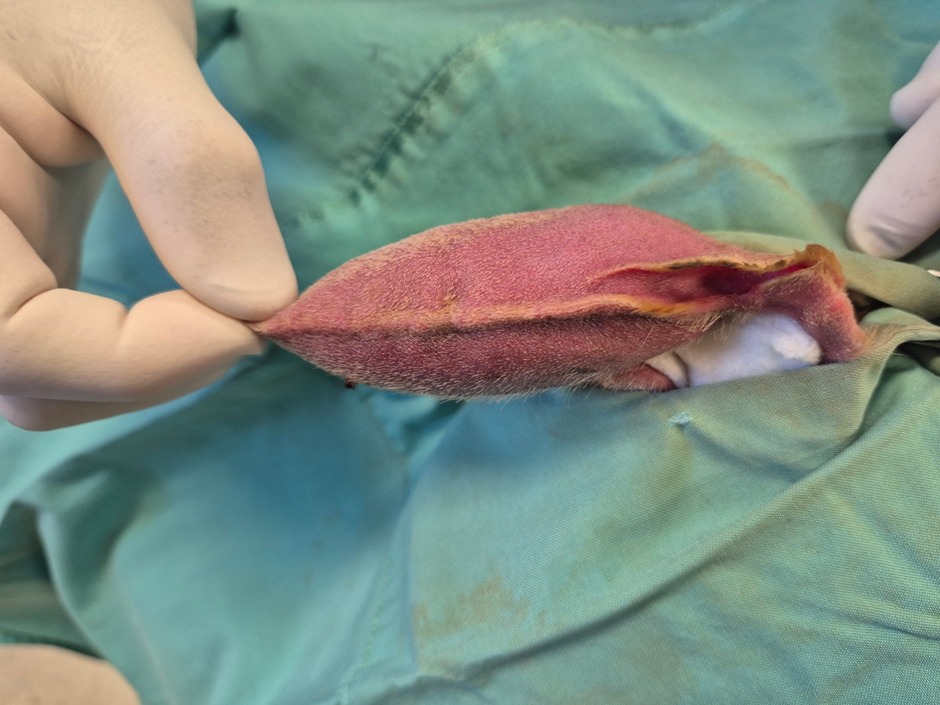
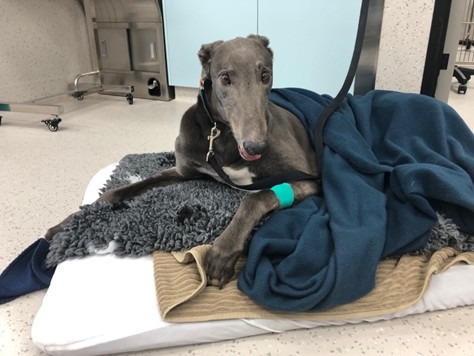
Having to amputate a patient’s limb invokes a visceral response in me, as a person. It feels wrong and unnatural to the human side of me, and I don’t look forward to doing it. But as a veterinarian, it’s something that I am called to do frequently and have performed successfully on many occasions.
The reaction can be very similar in the owner of a pet who has been recommended the amputation of a limb as a treatment option.
Often, the immediate, impulsive reaction is no!
The sort of comments we hear in the consult room are “I cannot imagine him without his limb”, or “It will be too much for him, I am not sure that he can take it”, or even “We put him through all this and how long will he live” etc.
Amputation may seem like a drastic measure, but it can be a compassionate and necessary choice to relieve pain, improve quality of life, and even save a dog’s life.
In this article, we talk about:
- Why we recommend amputations
- What to consider while contemplating an amputation for your pet
- How humans and pets cope differently with amputations
- First-hand experience from Sue and Soon Thang, whose beloved pet Popcorn underwent this procedure.
Why Are Amputations Recommended For Pets?
The most common reason for presenting the amputation of a limb as a treatment option is when the limb has developed a bone cancer.
Bone cancer can be quite painful, and amputation is recommended as a means of pain relief.
An amputation, while initially painful, can significantly reduce pain from the bone cancer once your pet has recovered and can positively impact the quality of their remaining life.
Other reasons include:
- severe wounds
- fractures or infections that cannot be cured
- neurological conditions
- congenital deformities
As a veterinarian, I can assure you that the recommendation to amputate a limb is never taken lightly and is only recommended after careful consideration.

How Humans And Pets Cope Differently With The Amputation Of A Limb
It is our experience, as veterinarians, that dogs and cats adapt to the amputation of their limbs much faster and with less psychological impact than humans.
Pets don’t have the concept of body image, and they don’t worry about how they look or what other people might think of them. They live in the moment, accept their situation, and learn new ways to adapt to the loss of their limbs. They heal faster in general compared to humans and do not experience phantom limb pain.
Dogs and cats do not overthink the loss of a limb. They experience pain, then get better, adapt to a new way of movement, and focus on enjoying life with their families. Their resilience and the ability to find joy in simple things and live in the moment should serve as an inspiration to us all.

What To Consider While Contemplating The Amputation Of Your Pet’s Limb
The first and the most important consideration is what is best for your pet, and to try and separate your own emotions from his or her needs.
This is a difficult one, and this is where an honest conversation with your veterinarian and some research can shed light on the facts, which may not be as stark and negative as you might believe. Your veterinarian will also be able to advise you of the risks and particular considerations for your pet.
For example, an overweight dog with arthritis may not be a good candidate for an amputation, while a young, healthy dog may be an excellent candidate.
After the amputation, you will have to spend some time nursing your pet, and you should be prepared for this. Please read the comments from Sue and Soon Thang on their experience with the amputation of Popcorn’s hind limb.
Popcorn’s story: A Pup With An Amputation
This is a personal story from a patient of Berwick Clyde Vets. The images are shared with their approval, professional images by @moniquerenee.photography
Popcorn, a beloved greyhound belonging to Sue and Soon Thang, was diagnosed with an Osteosarcoma, a painful cancer of the bone. Unfortunately, greyhounds are quite prone to these conditions.
The treatment options for a patient with an osteosarcoma and the median survival times are as follows:
- Palliative care with pain relief, median survival time 1-2 months
- Amputation alone + palliation, median survival time 4-6 months
- Amputation followed by chemotherapy and palliative care, median survival time 10-12 months, in some dogs it can be 2 years or over.

Sue and Soon, under our professional recommendation, decided to amputate Popcorn’s limb after careful consideration of the facts.
They have volunteered to talk to any pet parent considering an amputation for their pet’s limb, to share their experience and help guide them as to the realities of this surgery. If you would like to speak to them, please get in touch with our veterinary team, who can provide their details.
Here are some questions we asked them.
Q: Why did you decide to amputate Popcorn’s leg?
A: “To be honest, I wouldn’t say it was difficult to decide. It was really straightforward for us. Other than limping, Popcorn was still full of life, loving his walks, food, and treats. We knew for sure it was not the time to put him down, and we certainly do not want him to be in long-term pain or risk his bone getting fractured, so amputation was the “most comfortable” decision for us”.
Q: What were your considerations in deciding to do this procedure?
A: “The main consideration was definitely cost. We do not have pet insurance, so tertiary animal hospital costs were way too daunting and unpredictable for us. We heard that although not all vet GPs do amputations, some who do it are very experienced and can deliver similar outcomes as animal hospitals.
After speaking to Dr. Kunal (at Berwick Clyde Vet), we knew that he was the right person and we felt 100% confident in his skills/experience.
Other considerations were prognosis after amputation, recovery time, any added cost during recovery (e.g.: Do we need special equipment etc)”.
Q: What was your personal experience of the aftermath of this procedure?
A: “First few weeks were hard. The direct post-amputation was actually ok (not much to do in terms of dressing), but when Popcorn’s stump got infected (from licking excessively), a lot of attention, cleaning and dressing the wound were needed. Popcorn did not eat well at all, and he wasn’t himself in the first 2 weeks – it worried us so much.
We understand this is a life-changing surgery for Popcorn, and we continued to support and care for him the best we can, though it was quite taxing on some nights.
After the rough recovery period, it is the most rewarding thing we’ve ever experienced”.

Q: What is your advice to pet owners in a similar situation?
A: “Do not expect your dog to be the same dog, especially in the first 2 weeks. Expect to wake up at night. Expect to hand-feed your dog. Expect to help your dog in small things like standing up, in the first few days. If your dog licks its wound, put on a cone – it’s ok, better than getting an infection at the surgical site. If possible, take leave from work, have flexible work arrangements, or have someone to take turns with you, especially in the first few days.
It was undeniably difficult for the first 2-3 weeks, but once they recover, they bounce back so, so quickly. Dogs are really resilient – we just have to help, be patient and give them some time while they navigate how to be a tri-paw”.
Q: Would you do it again?
A: “100% yes – yes yes YES! Of course, we doubted our decision when Popcorn’s recovery was complicated with infection, but now that we are on the other end, looking at Popcorn – thriving and happy, it is all worth it. A few months might not sound like a lot, initially, but honestly, now, it is a luxury. We are so happy we did it.
Lastly, I just want to say that a lot of people might tell you / approach your tri-paw in the future and be sorry about them being a tri-paw. I think this mentality needs to change! Our dogs are really resilient, and they are OK being tri-paw, and what we are doing is helping them to have a better quality of life than allowing them to deteriorate in pain or abruptly end their life (putting them to sleep) when they still have so much life in them”.

We hope that this article has provided you with a first-hand experience of what you and your pet might go through after the experience of amputation of your pet’s limb.
We also hope that this article has provided you with some information to consider while making the tough decision to amputate or not.
At both our Lynbrook and Berwick Clyde Vet clinics, we have considerable experience with this procedure and are ready to support you in the difficult post op period. We look forward to being of assistance. Contact our team tel:0359027087 to book an appointment, or make an appointment online here.