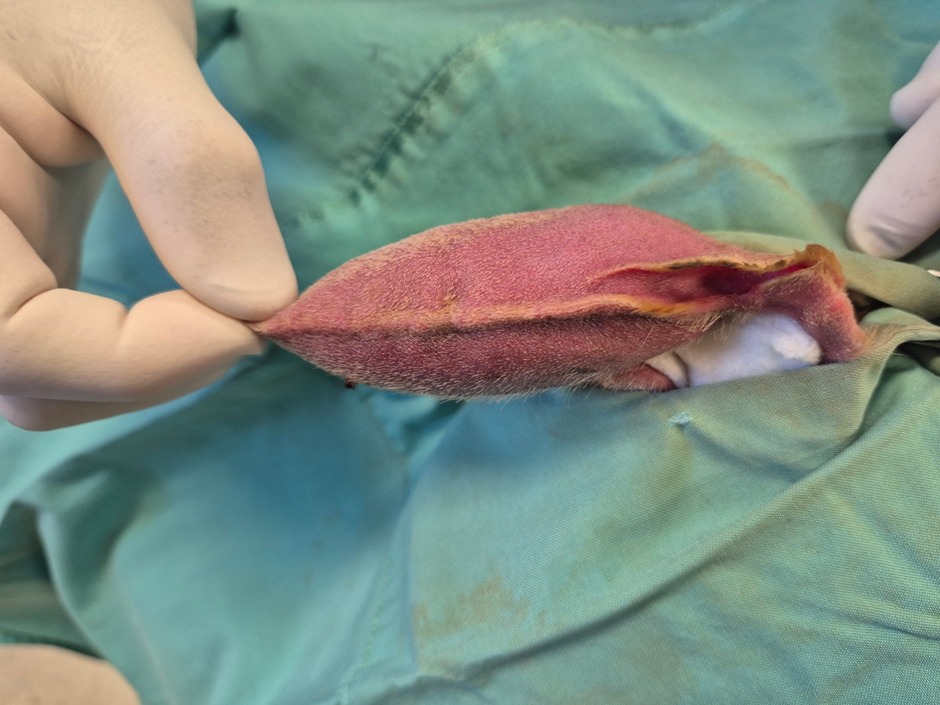

What Is Heartworm Disease?
Heartworm disease is serious and is caused by the presence of a parasite known as ‘heartworm’ in the heart, lungs and associated blood vessels of the body.
It is endemic in Australia and diagnosed across the globe.
These worms can grow up to one foot in length!
They cause severe lung and heart pathology, which can be seen as a persistent cough, reduced exercise ability, fatigue, reduced appetite, and weight loss.

Image credit: todaysveterinarypractice.com
What Species Are Affected By Heartworm Disease?
Heartworm disease predominantly affects:
- dogs
- cats
- and ferrets
Heartworms live in other mammalian species, such as the fox and dingos, which act as reservoir hosts. Foxes are close to, and within, most urban cities and towns in Victoria, making them an increased risk factor for the spread of heartworm.
The presence of reservoir hosts in the wild population makes it nearly impossible to eradicate this disease; hence, prevention is better than cure!
In Victoria, 2% of pound dogs and 28% of greyhounds were positive on necropsy in a 1978 study.
How Is Heartworm Spread?
Heartworm is spread from an infected animal or a reservoir host, such as a fox, to an uninfected animal through a mosquito bite.
A 2013 study showed 73% of mosquitoes in a heartworm-positive dog’s kennel are infected with heartworm.
Dogs travelling are another key spreader of this disease.
Moving dogs from one place to another is now a regular occurrence. This can involve family pets travelling with relocating owners, rescued animals being transferred for adoption, or dogs transported for shows, research, or trade. However, such movements increase the likelihood of spreading infectious diseases.
A mosquito bites a host animal or an infected animal and ingests blood. The blood contains larvae of the heartworm. The mosquito bites another uninfected animal, and it deposits these larvae into the other animal. These larvae then migrate to the heart and pulmonary artery, where they grow into adult worms, causing pathological changes which ultimately lead to heartworm disease. Here, they reproduce and produce more larvae, and the cycle continues.
Note that a study conducted in 1994 in Victoria found that 6% of foxes tested were positive for heartworm (source), creating a reservoir for the spread of heartworm to our pets.
Another risk factor is infected dogs travelling with their owners from areas of northern and eastern Australia. These dogs can carry heartworm into Victoria. Currently, there are no testing requirements that include heartworm in pets crossing the border into Victoria.
Climate change?
A critical factor for heartworm transmission is a climate with the right temperature and humidity to maintain mosquito populations, as well as enough sustained heat to allow microfilariae to mature into the infective L3 stage within the mosquito host. With man-made climate change driving warmer, more humid conditions in many regions, these prerequisites are increasingly being met, heightening the risk of transmission.
Plus, urban expansion has created ‘heat islands,’ where structures such as buildings and paved areas trap warmth. These warmer microclimates can enable mosquito vectors to support heartworm larval development even in cooler months, effectively extending the transmission season (Ledesma & Harrington, 2015; Morchón et al., 2012; Nelson, 2016).
Here is a source from the Heartworm Society, rich in stats, studies and information.
Summation of the reasons for the increase in Heartworm:
- Climate change
- Urbanisation
- More dogs travelling
- An increase in wild canids spreading the disease
Shifts in climate and environment—whether naturally occurring or human-driven—combined with increased animal movement, have raised the risk of heartworm transmission.
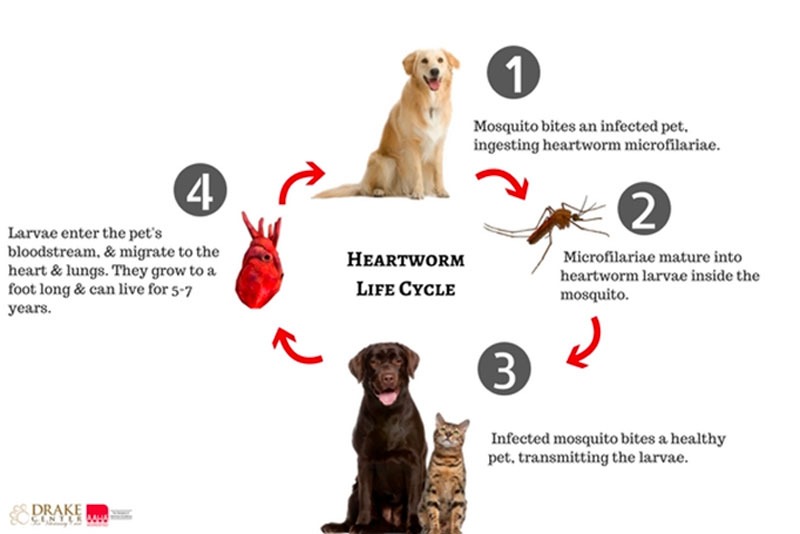
Image credit: thedrakecenter.com
How Common Is Heartworm Disease?
It is difficult to put an exact number to, as the reporting of heartworm infections is voluntary, and a lot of cases may go unreported.
A study conducted by Zoetis between 2014 and 2020 found 2,000 cases of heartworm in Australia were voluntarily reported. Out of these, 69 cases were from Victoria. This is roughly about 10-11 cases per year.
The concerning fact is that in North America, in areas that have a similar climate and mosquito population to Victoria and where the testing for this disease is much higher, there has been an increase of between 100% to 500% in the rates of detected infection with heartworm. It is possible that a similar trend can occur in Australia, but we won’t know.. That is why prevention is better than a cure!
What If My Pet Contracts Heart Worm?
Don’t worry! While this is not a pleasant diagnosis, the good news is that most dogs can be successfully treated.
It is likely that your pet was diagnosed through routine testing, or if he/ she was showing clinical signs consistent with heartworm disease, using a patient-side blood test. If this were the case, then the diagnosis would be confirmed by sending the blood to the lab. In the meantime, we will recommend strict exercise restriction and start them on a few medications to stabilise the disease and kill the larvae. The adult worms will then be killed using a series of three injections on day 30, day 60 and day 61. Your dog will need to be hospitalised for all these treatments. Nine months after treatment, we will do another heartworm test to make sure all worms have been eliminated.
Unfortunately, there is no approved drug therapy for the treatment of heartworm infection in cats and ferrets. They will need supportive veterinary care as needed.
What is The Cost Of Heartworm Treatment?
The cost for the testing and treatment of heartworm infection in dogs can run into several thousand dollars. Add to this the damage, sometimes permanent, done to your pet’s body and the stress and worry it entails, compared to the meagre costs of prevention and prevention over treatment is a no-brainer!

How do I protect my pet against heartworm?
For dogs, the best way to protect against heartworm is through the heartworm injection. We recommend ProHeart 12. It’s been sold in Australia for 23+ years and has protected millions of dogs.
This protection lasts one year in dogs over 1 year of age; puppies need two injections to get them up to speed.
If you want to do monthly treatments, they are available to be given orally to your pet or applied on their skin, and they are conveniently coupled with flea/ tick prevention and also intestinal worming. We recommend Simparica TRIO.
Research has shown, however, that at least 40% of people forget to give their pets these monthly treatments, which increases the risk of contracting heartworm. Therefore, the yearly heartworm injection is the safest bet.
Cats and ferrets can be treated for heartworm using simple topical products that need to be applied once a month. We recommend Advocate Fleas, Heartworm and Worms

We hope that this article has provided you with some useful information about heartworm, how it spreads, the low but very real risks of heartworm in our pets and how to conveniently protect your dog, cat or ferret from heartworm infection.
As a veterinarian, I take advantage of the yearly heartworm injection for my dogs because I want what’s best for them, and I never want to miss a treatment.
At Lynbrook Vet and Berwick Clyde Vet, we stock the yearly vaccination for dogs and the monthly treatments for dogs, cats and ferrets.
Please give our friendly team a call (03) 5902 7087 if you have any questions.