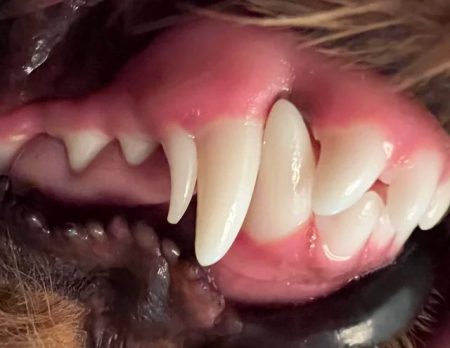
Retained teeth in puppies are the baby (deciduous) teeth that fail to fall out when the permanent teeth erupt. This is a common problem, especially in small-breed dogs and usually affects the canine teeth; however, it can affect other teeth as well.
Why does it happen?
Normally, when a puppy reaches 4-5 months of age, the baby teeth start to loosen, and by the end of 6 months, they fall out, and the pup’s permanent teeth are fully grown. If a baby tooth fails to loosen as the adult tooth continues to grow next to it, then it is referred to as a retained tooth.
Potential problems caused by retained teeth
1. Crowding
Retained teeth may overcrowd the mouth, and the new teeth grow in a non-ideal position, which can lead to pain, jaw issues and dental disease.

2. Dental Disease
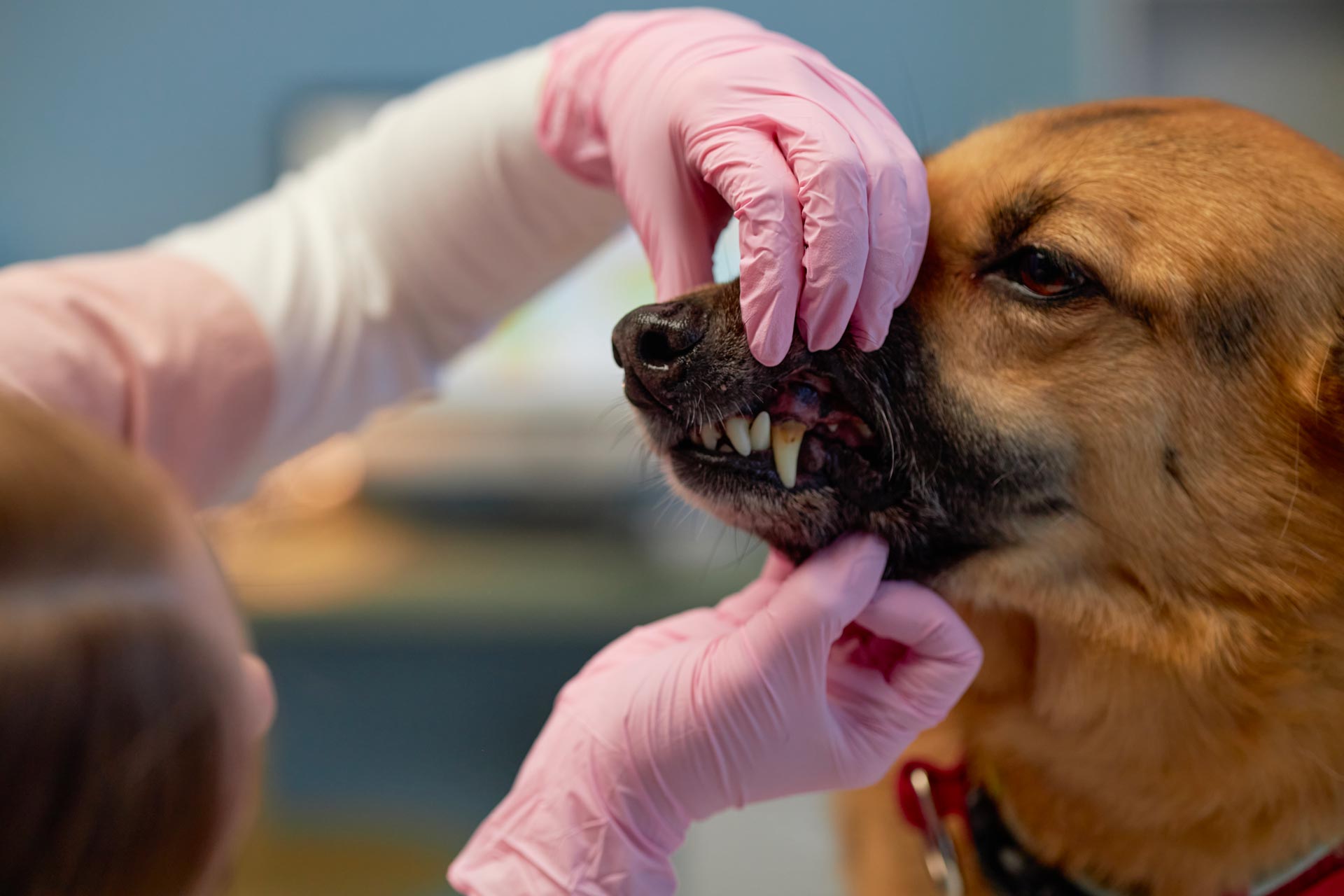
It will be harder to clean the teeth due to crowding, and the overlapping baby tooth and adult tooth will cause an easy breeding ground for bacteria, which will cause plaque and tartar build up.
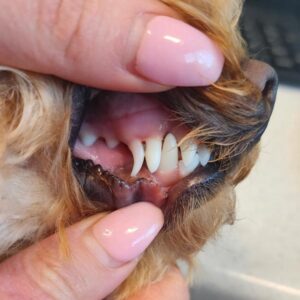
In the attached images, you can see a build up of food between the sharp, thin and pointy baby tooth and the rounder, larger adult tooth.
3. Damage to the adult tooth
Retained teeth can impact the adult tooth by rubbing against it, causing it to become weak and could lead to an early onset of decay or tooth death.
4. Jaw pain or Malocclusion
Retained teeth can interfere with the alignment of the puppy’s jaw, leading to deformities of the jawbone.
Treatment for Retained Teeth
Your Veterinarian may recommend the following options to help your pet:
- Monitoring – If the adult tooth has not fully erupted, your vet may recommend to wait and see if the baby tooth will fall by itself. However, if this doesn’t occur by the age of 6 months, and the baby tooth is still solid, it is unlikely that it will fall on its own.
- Extraction – In cases where a baby tooth doesn’t fall by itself or is causing problems, your vet may recommend removal, which is usually done under anaesthesia. Often removal of these baby teeth is done at the same time as desexing.
Source – Reddit
Prevention and care
- Regular check-ups – Take your puppy to the vet for regular dental check-ups to make sure their teeth are healthy, developing okay and not retained.
- Dental care – Regularly brush your pet’s teeth and continue to do this once all of their adult teeth are fully grown. You can also use dental toys and chews.
If you have concerns about your dog’s teeth, our experienced vets are happy to help. Get in touch with our team, or book an appointment.